Wednesday, May 8, 2013

No Country For Women

      I do not recall the exact moment I became aware of women’s issues in Christianity. I believe it was my first month in Bible College at the age of nineteen. Most of my upbringing was permeated with images of my mother leading worship, giving vivid descriptions of prophetic images, and preaching from the pulpit. She was something else to behold. I remember her frazzled hours in study and research, gathering information in English and practicing her delivery in Portuguese. And then the final product; the woman could deliver. I cannot recollect ever knowing her to wonder about her calling or whether or not she should be performing certain tasks in ministry. At my young age I did not even notice the disapproving glances from some of our conservative missionary friends when we would discuss the nature of Pentecostal growth in South America. I was oblivious. 
Then there was college. I drove out to Southern California glowing with the prospects of my newly realized freedom. This was going to be great! I did not fully understand the idea of a calling, but I knew I was called to something. As I became familiar with my new school, the students, and Bible College life, awareness began to sink in. One of the whispered mottos amongst the young men was something to the effect of finding a wife before graduation. I felt sick to my stomach. Was that all there was to it? I was part of a pageant lineup to better accessorize the calling and ministry of one of my male peers? I was appalled. What of my gifts? What of my calling? My calling is not confined to roles, jobs, or tasks I may perform, but is a general integrative theme that weaves its way throughout my life. I ran. I ran straight to the Air Force recruiter’s office and enlisted for six years. Did I find the liberation I was seeking? To answer that we must attempt to understand what liberation and subjugation truly are and the tinges they adopt through the lens of varying cultures. 
The purpose of this study is to analyze the impact of evangelicalism on women within culture. It will compare the world’s major religions and secular cultural shifts to effectively gauge how women have fared globally in contrast to the evangelical movement. 

Islam 
Islam has three predominant views of women across the spectrum. The first view is the traditionalist view. The traditionalist believes that all women are inferior to any man. It is thought that women are happier and society is stronger when women obey men’s decisions in all aspects of life.The traditionalist holds to the notion that a woman can only become happy and fulfilled in her role as mother. Women are not capable of competing with men in the workforce because of inferior intellect and physical weakness.
The second view is the feminist view. The feminist favors complete secularization of Islamic societies and equal legal rights for women. The feminist views Islam as irreconcilable with women’s rights and believes the modernization of Islam to be a wasted effort that will only prolong the oppression of women.
The third view is the progressive. Progressives do not accept the ancient interpretations of the prophet Muhammad's words that argue for women as weak and inferior. Progressives have taken to understanding the sacred writings of the Qur’an in a contemporary light that is relevant to modern culture. They believe their interpretations to be as valid as those of any previous scholars. 
One of the predominant topics in Islam is polygyny. Speaking from a Christian perspective, Islam takes into account the fallen nature of man and his natural inclination towards infidelity, but instead of encouraging a higher standard, provides for this in the practice of polygyny. Traditionalists see western culture as irresponsible in their care for women as infidelity is unavoidable and leaves a girlfriend or mistress without provision. According to the traditionalist, the practice of polygyny does not allow for such immoral behavior and demands that a man be accountable for all women he potentially seeks out for sexual gratification. For most Muslim women, rejecting religion is not an option. They desire to find liberation, truth, and justice from within their own faith.
The progressive muslim woman believes the traditional interpretations of the Qur’an to be patriarchal and states the following: “For too long, men have defined for us what it is to be a woman, how to be a woman and then to use religion to confine us to these socially constructed limitations that reduce us to being the inferior half of the human race.” They are convinced that Islam in and of itself does not oppress women, but is instead influenced by cultural practices and values of a society that views women as inferior and subordinate to men.
Young Iranian girls who think themselves victims of a fundamentalist system frequently run away from home. They do not, however, run to freedom. Ninety percent of these young runaways end up captured and sold into prostitution. For them it is a lose/lose situation. They run from one dehumanizing practice into the arms of an even more abhorrent future. The message is to cover up or be completely uncovered. The women’s movement in Islam is rooted in cultural shifts towards feminism that characterized the 1970’s. Current female political figures in the Islam world find that forward thinking towards equality is grounds for continual and fatal threats against their lives and the lives of their families. 

Hinduism
In India the women’s movement accompanied colonization by the British Empire in the late 19th century. Pandita Ramabai is considered the mother of the women’s movement in India. Her motivation to improve social conditions for women is accredited to her conversion to Christianity in 1883. Ramabai rebelled against the exploitive nature of the Hindu religion.
       The Hindu and Muslim women in India began forming groups and societies as early as the 1860‘s. They would discuss the evils of the Purdah System and polygamy. The establishment of the Young Women’s Christian Association in India in the 1880‘s gave them the confidence they needed to speak out against injustice. A group called Rashtra Sevika Samiti (RSS) founded in 1936 took up the causes of fetus testing, infanticide, and the abortion of female infants considering these practices an extreme insult to women. They felt such practices were an overall attempt to thin out the Hindu population in the name of family planning.
The male population outnumbers the female population in all religious communities.  Hindu feminists consider the caste system to be the main cause of all societal ills against women to include domestic and societal abuse and female infanticide. They believe it to be an assault to woman’s character, piety and moral conduct. Most women attempting to maintain some semblance of Hindu culture cannot reconcile with women’s movements. There is little to no shift towards an interpretation that would allow both to coexist. In a recent work, Sheryl WuDunn tells the horrific stories of Dalit life in Indian slums. The injustices suffered in this culture are a matter of human rights and are not confined to women’s issues, yet women are leading the outcry as their husbands, brothers, and sons also suffer at the hands of the caste system.

Buddhism
Women in Buddhist influenced cultures are trapped in the dichotomous dynamics of the over-sexualized female and a complete denial of any beneficial sexual identity. The Buddhist view of women aligns with a patriarchal power structure reflecting the educated religious elite and leaves no room for sexual egalitarianism.  Buddhist texts represent the masculine as sacred and feminine as obscene and defective. The result for women is an association with their feminine identity as secular, powerless, profane and imperfect.
       Women took note of the destructive images that prevented their spiritual fulfillment and an exploration of feminism into Buddhism began in the 1930‘s prompted by I.B. Horner’s Women Under Primitive Buddhism. Horner pointed out the glorification of the role of prostitute and desirable traits frequently portrayed in Buddhist literature. In contrast, much was also written on the preference for sexual transcendence. The role of the mother in society was completely devalued. The dichotomy dictated that women’s sexuality must either be completely evil or nonexistent. As neither option is a reality, women’s power in society was virtually eliminated. Buddhism, not unlike some primitive thought in Christianity, viewed sexuality as a result of a fallen world, or as they phrase it, the “devolution of the cosmos.”
  With such transcendent knowledge, the soteriological path for women became the complete reversal of their sexuality and worldly desires and in some sects, their transformation and rebirth as male. Due to the intense emphasis in Buddhism on detachment from worldly senses, motherhood is resented and understood as an undesirable attachment and bond with this world. As with Islam and Hinduism, Buddhist texts portrayed the female sex as physically and mentally weak, defective, and more vulnerable to ignorance. Not uncommon to Christian antifeminist arguments, Buddhists claimed that “if women left the domestic sphere of activities, social institutions would collapse with the expected breakdown of the family.”

Judaism
Judaism follows much the same path as that of Christianity. Recent studies have shown evidence of prominent female rabbinic leadership from the 1st century BC into the 6th century AD. Brooten explores the existence of several inscriptions from this time period bearing the titles “head of synagogue,” “leader,” “elder,” “mother of the synagogue,” and “priestess.” In her thesis, Brooten attempts to discern whether or not the titles are honorific or functional. She finds no grounds for honorific titles during this time period and concludes that the titles were functional. Brooten concedes that such roles for women were an exception to the norm, not unlike the present in Judaism. 
Aside from Brooten’s study, it is the consensus of most feminist scholars that the voices of women were silenced during the Talmudic period and disregarded by the men shaping Jewish liturgy.The winds of change stirred the hearts of ten jewish women in 1972 and they crashed the Conservative Rabbinical Assembly with a list of demands towards equal rights for women. The list did not include full rabbinical instatement and focused on smaller participatory tasks such as prayer and teaching in the synagogue. Women continue to move forward in Judaism and have a strong legacy and rich heritage that supports their case for egalitarianism. Cultural advances have been made for the celebration of womanhood in areas previously conceived of as taboo, such as sexuality, menstruation, and birth. 

Catholicism
Catholicism follows along the same lines as much of Christianity throughout history. Women have been afforded highly influential roles within the church, but remain short of offices such as priest and bishop. Common perception has been that women are not called to such offices and lack a general understanding of what it means to be a member of the clergy in the Catholic Church. 
A case study was conducted in the 1970‘s on one hundred women who professed a calling to the priesthood. These women were organized into five groups. The first two groups exemplified great spiritual depth and understanding of the role of priest. The latter three groups opined more on what was wrong with the role. While seen as negative in this particular case study, such sentiments are not uncommon to a professed purpose by women in other arenas. Upon being interviewed, both Michelle Bachmann and Sarah Palin, contemporary women in conservative politics and professed evangelicals, answered that their start in politics was motivated out of a need to change the corruption they saw around them - a corruption they perceived as a result of a “good old boy’s” network. 
The Catholic women interviewed believed God made men and women as helpmates who complement each other. From their perspective the priesthood is intrinsically limited today because of its exclusivity of women and the absence of this intended partnership in ministry. When exploring the reasons behind the women’s aspirations to the priesthood, their reasons were not any different than that of their male counterparts to include both healthy and unhealthy reasons. The overall assessment was that most women who profess to have a call to the priesthood are spiritually, emotionally, and socially stable with the ability to discern a call to the priesthood. Of the women interviewed seventy seven percent were acting out of legitimate awareness of God’s voice and a calling on their lives.

The Reformation and Beyond
Methodists can be credited with much of what we know of feminism today. Many evangelical groups attempt to view feminism as apart from Christianity when in actuality, it is a product of Christianity. Two verses come to mind that may help set the stage for the historical scene that played out in the 18th and 19th centuries. The first is from Joel’s prophecy, “I will pour out my Spirit on all flesh; your sons and your daughters shall prophesy, your old men shall dream dreams, and your young men shall see visions. Even on the male and female servants in those days I will pour out my Spirit.” The second verse is from Paul’s letter to the Corinthians, “Now the Lord is the Spirit, and where the Spirit of the Lord is, there is freedom.”
The Methodist movement began with John Wesley in the 1740’s. Wesley found great value in the counsel of both men and women. He endorsed women’s charitable works and their influential prowess in leading others to Christ through personal testimony and prayer. John Wesley was an entrepreneur of sorts who took the message of the gospel beyond the walls of the church into the open air. Wesley was truly a reformist and attempted to bring about change within the Anglican tradition. He remained an Anglican for the duration of his life even amidst the continual debates that challenged the status quo. 
Due to the open-air setting of Wesley’s approach, many women found themselves uninhibited by the walls of the establishment, priestly raiments, and hallowed pulpit. Moving within the parameters of Wesley’s admonitions of testimony and prayer, women found themselves afforded the opportunity to preach. Uncertain of her allowances and not wanting to violate any unspoken mandate, Sarah Crosby wrote in 1769 to Wesley inquiring of the appropriateness of her preaching. In response, Wesley wrote to Ms. Crosby cautioning her against the appearance of preaching and advising her in ways to circumvent the issue. Eventually Wesley fully endorsed women in the task of preaching on the grounds of what he termed an extraordinary call. 
The first half of the 19th century saw a continuation of women as lay ministers throughout western culture and in evangelical settings. Women traveled the country serving parishes and preaching at revivals. Women were instrumental in leading movements for the abolition of slavery and prison reform. Women were not concerned with equal rights, but with the calling they felt to preach the gospel. In 1861 the Methodist Episcopal Church (MEC) presented a vote for the laity rights of women. The vote failed by a narrow margin, but was ratified in 1868 when once again the vote came to the floor of the General Conference (GC). The unforeseen consequence of the vote was the appearance of five female delegates at the General Conference. Secular and Christian journalists alike covered the event, as it predated any suffrage movement. The women were removed from the GC, but not for long. In 1904 twenty four women took their rightful places as lay delegates to the GC. Opponents of the decision voiced a fear that women, making up two thirds of the church population, would take over. These fears were unfounded and women strove to work responsibly in cooperation with the men of the church.Women have always been considered the mainstays of the Church throughout history and have constituted a majority. Modern sociologists identify the same trend in the early centuries of the Church. 

Conclusion
In analyzing the trends between the roles and influence of women in the early church and in evangelical movements, the common denominator for advancement towards women’s rights seems to be the manifest presence and work of the Holy Spirit. Every documented “wave” of the Holy Spirit is closely followed by what we also term “waves” of feminism. The reformative nature of the evangelical movement was a ripe field for the beginnings of women’s rights. From the early stages of the Church, Christians have been known for their innovative solutions for the betterment of society. Care and compassion for one another is exemplary of our roots and continues to be characteristic of the spread of the gospel. Christianity has always been at the cutting edge of societal reform.
Secular society, however, tends to take what good the Church has accomplished through strong ethics and principles and twist it for evil purposes. We see this happen in the institution of welfare states that counter the good accomplished by the liberation of minorities. We see the good accomplished towards healthy work conditions and fair pay bent towards the greed and corruption that now characterize many of our labor unions. We see the same perversion in what the Church desired to be a Spirit led movement towards an equal view of men and women in giftings and standing before God. Secular culture led feminism into a dark extreme of oppression that stripped women of their divinely designed femininity, sexuality, and modesty. Evangelical Christianity maintains at large, that men and women are created equal and that our differences contain meaning and purpose. 
Much is written in popular evangelical circles that confuses the facts surrounding the move of feminism and is counterproductive to the good accomplished by the Church. Fear of growth threatens to take us back centuries to an oppressive age predating the Reformation. One popular evangelical pastor bashes the temperance movement as an attempt to "wussify" the Christian man and strip him of his freedom. His observations on the temperance movement are uninformed and poorly researched and do not take into account the post war era and depression that was leading the country swiftly towards passivity and alcoholism. The temperance movement, regardless of what poor theology may have emerged in conjunction with it, most likely saved the nation from a sure plummet into dependency. As we have seen time and time again, the ramifications of war on returning veterans are overwhelming and immobilizing. Healing and time are required before soldiers can effectively reintegrate into family and society. Rwanda is a modern example of a country recovering from genocide through the efforts of women, while men take the needed time to rediscover and reinvent vision. Rwandan women lament the depression their men have fallen into and the passivity to which they have succumbed. They would do anything to pull their once stoic warriors away from the bottle and back into the present realities of rebuilding a country. The post war contributions of women worldwide to replenish, nurture, rejuvenate and sustain cultures are infamous throughout history and our story of civil war is no different. The temperance movement was an endeavor to save our men from the same fate. 
There are many faults and injustices that can be found within Evangelical Christianity in regards to women’s rights. I think there is still a great deal of work to accomplish if we ever hope to arrive at a Biblical egalitarian view. My approach has changed drastically from those early college days. I no longer run from the challenge presented by views of inequality, hoping to find freedom in the secular world. Now I meet the confrontation with anticipation, hoping to change the minds of those who would view me as incompetent or inferior in spiritual giftedness. Feminism is not a product of secular culture; it is a global movement that, as so many global movements before, was conceived in the fertile soil of the gospel and will continue to grow until it has reached fruition. 
When it comes to equality, no place is “safe”. However, comparatively speaking, as we have analyzed the present state of the major religions of the world and culture in general, Evangelical Christianity is clearly the most protected yet simultaneously liberating environment for healthy growth towards an egalitarian view of women as we are created to be - distinct, yet equal. Carolyn Custis James notes it well, “Women don’t want to create a parallel universe in the church for women, but desire instead to be incorporated into the ministries and life of the body of Christ - to be part of a Blessed Alliance living out the gospel together with their brothers.”

BIBLIOGRAPHY
Brooten, Bernadette J. Women Leaders in the Ancient Synagogue. Scholars Press: Chico, CA. 1982.
Chilcote, Paul Wesley. John Wesley and the Women Preachers of Early Methodism. The Scarecrow Press, Inc.: Metuchen, NJ. 1991.
Chilcote, Paul Wesley. She Offered Them Christ: The Legacy of Women Preachers in Early Methodism. Abingdon Press: Nashville, TN. 1993.
Driscoll, Mark. The Radical Reformission. Zondervan: Grand Rapids, MI. 2004.
Durrany, K.S. The Women’s Movement in Religious Communities in India. Cambridge Press: Kashmere Gate, Delhi. 2002. 
Ferder, Fran. Called to Break Bread?: A psychological investigation of 100 women who feel called to the priesthood in the Catholic Church. Quixote Center, Inc.: Mt. Rainer, MD. 1978.
Gifford, Carolyn De Swarte. The Debate in the Methodist Episcopal Church Over Laity Rights for Women. Garland Publishing, Inc.: New York, NY. 1987.
Gifford, Carolyn De Swarte. The Defense of Women’s Rights to Ordination in the Methodist Episcopal Church. Garland Publishing, Inc.: New York, NY. 1987.
Haddad, Yvonne Yazbeck & John L. Esposito. Daughters of Abraham: Feminist Thought in Judaism, Christianity, and Islam. University Press of Florida: Gainesville, FL. 2001.
James, Carolyn Custis. Half the Church: Recapturing God’s Global Vision for Women. Zondervan: Grand Rapids, MI. 2010. 
Kristoff, Nicholas D. & Sheryl WuDunn. Half the Sky: Turning Oppression into Opportunity for Women Worldwide. Vintage Books: New York. 2009.
Paul, Diana Y. Women in Buddhism: Images of the Feminine in Mahayana Tradition. Asian Humanities Press: Berkeley, CA. 1979.
Yuan, Margaret Speaker. Women in Islam. Greenhaven Press: Farmington Hills, MI. 2005.


Tuesday, April 30, 2013

Hide and Seek


Hide and Seek. Probably the oldest of children’s games. I recall feelings of anticipation, excitement, fear, joy while playing hide and seek as a child. The anticipation and excitement of being sought out and pursued, the fear and adrenaline rush of being stumbled upon. And joy. Joy as we laughed over hiding places and the giddiness of a spot well chosen. “I was there the whole time and you didn’t even see me!”

I watch my children play hide and seek now. I listen to their giggles and heavy breathing as they try to stay quiet and covert to no avail. What makes hide and seek so fun? I think it is the knowledge that we are finding new places, cultivating our ingenuity and creativity as we engage and interact with a fresh perspective.

When Naomi first learned to play hide and seek with me (she had no younger sibling then) she always chose the same places. I would have to feign ignorance and work my way to where she was hiding. In her mind, these were the places that were safe, comfortable and known to her. This is where she knew I would find her. She would get so frustrated when I was not in my usual hiding spot. But it was still fun, because she knew I was playing. I was still there...somewhere. I would hear her little voice, “Mommy, where are you?” I did not give in. This was part of the fun. There was something about her finding me in a new place that elicited squeals of delight. I loved the look of surprise on her face, her little arms wrapping around my neck as she would lunge at me in elated reprieve. We’d laugh. Each time she found me she learned something new.

Now Naomi plays hide and seek with her little brother Declan. I watch the same scenario play out. Declan does not know to choose new places. He is impatient. If you take too long to find him, he will call out, “Come find me,” giving away his location. Naomi has cultivated the art of concealment and quickly finds new and creative places to abscond. Now I hear Declan’s not so little voice, “Naomi, where are you?” He knows she is there. She has not left him. She is engaging with him in her nonresponse, daring him to find her in a new and exclusive place. And when he finds her he laughs saying, “Naomi, that was great! You’re a great hider!” 

God plays. God is creative. God is in the ordinary. God is in the new. I am accustomed to finding God in certain places. These are safe, comfortable, and known places to me. In my mind, this is where I will find God. This is where He is hiding. But there comes a time when I must stretch my creative genius and God lingers somewhere new. He waits for me to find Him, to seek Him out, to pursue Him. I go to the safe places first. I do not find Him. But He is there...somewhere. I call out, “God, where are you?” He does not answer. If He answers I no longer seek Him out; I fail to find Him somewhere new, somewhere unexpected that will bring forth my joy. We cease to play. 

There are times when I feel fear, wondering if God has truly left me and if I am not instead playing some pointless game alone. Words heard long ago echo across the centuries and allay my fears, “The Lord your God goes with you; He will never leave you nor forsake you.” I know in that moment that my anxiety is without merit. Whispers of apprehension reveal what I should have known all along - He is somewhere new. He desires to broaden my horizons, to see me grow, to see me increase in the knowledge of Him. It is God at play and I have been invited to join. When I find Him we will laugh. I will delight in His creativeness because He has engaged me and drawn me to Him, to a new place, a new perspective, a new experience. When you find yourself crying out to Him, “God, where are you?” and He does not answer, think on it as an invitation to play, an opportunity to engage the Creator in a unique and exclusive way. Seek Him out. He is there - somewhere.   


Monday, April 1, 2013

Cutters. The Lot of Us.

Running out of milk. It has to be the greatest nuisance. Especially when trying to nourish a growing boy who drinks a quart a day. Not to mention the annoyance of having to go out for more, because you always discover the need at the most inopportune time. Yesterday was no different than any other day. Why should it be? I stopped by my local Walgreens to grab another gallon. As I hurried towards the refrigerators in the back I happened to glance down an aisle at another customer perusing candy. She looked normal enough. Nothing terribly impressive. Nothing terribly fiendish. I took a double take at her shirt before realizing it was a tank top. Almost 70 degrees in Colorado in March practically demands the otherwise questionable fashion choice. But it wasn't the tank top that caught my eye. It was the shimmer of her arms laced with white stripes. From shoulder to wrist, not a single gap visible. At another time in life I might have seen such a thing and wondered with perplexity at the atrocity. But not today. All I thought as I barely broke stride was, huh - that's a lot of pain.

I know pain. I know it well. Pain leaves scars etched across our minds, our hearts, our souls. At times the wounds are so ghastly, so caustic that the only thought that crosses our blurred perception is how can I distract myself from this feeling. I recall laboring with my daughter. They say you don't remember the pain, but I do. I had a focal point on the far side of the room. Every time a contraction hit I would focus on that spot with amazing resilience. During one particularly painful contraction a family member entered the room and addressed me. I broke concentration. The next thing anyone remembers is a moan  in rapid escalation to blood curdling crescendo at who knows what or who - GET OUT!!! Needless to say, the place quickly vacated.

Pain causes us to cut. We cut. And we cut deep. We cut whatever we can get our hands on. I'm not much for cutting myself. Tried it once. Didn't like it. But I learned to cut in different ways. At first I learned to cut with actions. If you hurt me, I was going to take you out. But actions have consequences and I didn't always like those so I moved on.

I learned to cut with my tongue. I learned to cut  down others. If amidst my pain I could find another target on which to focus someone was getting cut. I knew I cut and it took a lot of self-control not to do it. I lashed hard with words. And I was good at it. The better I knew a person, the worse the damage. I knew the soft spots, the vulnerabilities, sensitivities. Vital organs were going to be slashed. But words carry consequences too. And so I learned to restrain those as well.

I graduated to the mother of all cutting. I learned to completely cut people off. You didn't get my revenge. You didn't get biting words. You got nothing. And nothing in this case is worse than something. I've been a parent for ten years now and I've learned that the worse thing you can do to a child is not punishment, or loud words. The worse thing that could happen is neglect and abandonment.  The complete withdrawal of all love. Because even amidst the beatings or verbal assaults, we still receive something. And while it may not seem like much it is all we know that is akin to love. But abandonment? There is no love in that. I learned to abandon. At one point I even abandoned food. I had no image complex. I did not think myself fat or ugly. I had no desire to lose weight. The emotional pain I felt was simply so great that the gnawing hunger pains in my stomach were a comfort and distraction.

We all have means of cutting. I run to dull the pain now. Functionally it's no different than cutting. I feel pain and I reach for my bag of endorphins masquerading as miles. As I briefly glanced at that young woman browsing for comfort food yesterday, I didn't think - oh how terrible. I thought - she's just like me. We're all more alike than we care to admit. We make faulty comparisons, placing degrees of severity on the outward manifestation when the internal struggle is just as damaging and ugly and often far more destructive. No one can see the internal struggle. No one can hear the cry for help.

I didn't write this as a cry for help. I'm not sure why I wrote it at all. I just couldn't seem to erase the image of those meticulously sketched arms from my mind. We all feel pain. It is the result of a fallen world. Consequentially, we all cut. One thing I have come to realize over the years is that no amount of cutting, whether physical, behavioral, verbal or any other sort can take away the pain. They are all mere substitutes until we encounter the One who bore it all. The One who was pierced for our transgressions and bruised for our iniquities. The One who will eventually erase all pain and sorrow from this world. It is a hope in Him that makes all pain bearable. Hope in the resurrected Christ is why we celebrate Easter, so I suppose it is appropriate that it happened to be Easter Sunday. I just didn't expect to be moved by a run to Walgreens.  

All that for a gallon of milk.


Saturday, November 10, 2012

Space, Time, and Love

What is space-time? How is space-time? Why is space-time? The 'what' question is probably the simplest to answer. Space-time is the combination of the when and where of everything that happens. That happens... What happens? Everything happens. When 'when' and 'where' collide, space-time happens.

Time is a matter of relationship. We base our understanding of time on the relationship between sun, moon, and earth. The relationship of these three bodies within the space they were created are what constitute the passage of time. Days hinge on the orientation of the earth to the sun, and nights are dependent on the earth's orientation to the moon. We base time on this relationship. Outside of the relationship of bodies time cannot and does not exist. The beginning of all existence is founded on the relationship and interaction of bodies. As bodies cease to be, time ceases to be. We understand the idea of the end of time as the end of one or all of these heavenly bodies. Space factors into the equation because bodies require space to occupy and interact. So the nature of space-time is relational.

The 'how' of the matter gets a little more complex.   How do space and time meet? What mathematical phenomenon brings these two seemingly independent factors into complement? My premise? Love. Love actualizes and contextualizes time and space.

What?! Love is not mathematical. Or is it? We are always attempting to quantify love. In temporal terms we love more or we love less.

"I love you."
"I love you more."
"No, I love you more."

...continue ad nauseum...

We love some or not at all. In an infinite sense we speak of God's love as unfailing, eternal, perpetual. Love is quantifiable and so I argue that love is indeed mathematical. Love seems to function proportionally to the presence of time and space. We love and we devote time and space to individuals, increasing our availability in proportion to our love. We retract our love and time and space decrease. Or we simply redefine our love and the circumstances of our time and space must be redefined.

If this answers the 'how' of space-time then the question of 'why' exists. Why love? Why space-time? And if God is love, then is God also space-time? We speak of God in terms of His three persons as incomprehensible without each person. Father, Son, and Holy Spirit are members of the Godhead and constitute who we understand to be God. As three persons in relationship, one God, there is a concept of time and space that is only His. If God is space and time what does His space and time have in common with ours? I think God is space and time just as He is love. But His space and time are a relational notion within His being. In other words God functions eternally in a space and time of His own existence that independently has nothing in common with ours.

So if God has nothing in common with our time and space then how can He possibly enter into it? Love. "For God so loved the world, that he gave His only begotten Son that whosoever believes in him shall not perish but have eternal life." God's love is what generated creation from nothing. His love opened space and time to accommodate creation. His love for that creation created a common space and time in which to infiltrate that creation with His Incarnation. It is love that fills voids and gives purpose to space and time that would otherwise be meaningless.

Love contextualizes space and time. God and the world do not have time and space in common, they have love in common which allows for the intersection of common time and space. God so loved the world, that time and space opened up to His occupation in the temporal. When we believe in him we are reciprocating love and entering into His eternal life in time and space. The infinite occupies the finite and in turn the finite partake of the infinite.

We are creatures made in His image. We are designed to exist within time and space with one another, which means we are meant to love one another. The proportion of our love designates the time and space we allot to the receiver of that love. We devote our time and space to the things we love. The things we love fill our time and space. When our love is disproportionate to time and space, voids exist. These voids are empty, cold, lonely - formless.

Be cautious with your love. Once you have given love, created time and space, it cannot be uncreated. It can only be abandoned, left formless and void. We are imperfect creatures, fallen. We cannot love perfectly and therefore voids will always exist. The only protection we have is intentionality. Do not love capriciously, flippantly, but freely and intentionally.

God is love. God loves infinitely. Therefore, He exists within an infinite time and space. God loves those in finite time and space, therefore He can exist within finite time and space.

For God so loved...and then there was Incarnation - the occupation of the infinite into finite time and space. For God so loves, that His Word is never void. For God so loves.


Sunday, September 23, 2012

Leave Me Alone

I stared at the ceiling. It somehow mirrored my emotion. Blank. Empty. Devoid of life. Occasionally my eyes would flit to a small chartreuse vase overflowing with bright yellow flowers, then back to the ceiling again. They mocked me. I wanted to hurl the blossoms across the room, to hear the shattering of glass against the wall, to watch the flora scatter about the room and discolored water paint the walls. But I didn't have the energy, or the strength.

Mom came into the room. She was visiting from out of town. She flew in amidst the chaos and bustle of emergency rooms, doctors, and panicked family.

"Debbie. It's time to change bandages again."

We began the long and arduous trek up the stairs. 14 stairs. It might as well have been Mt. Everest. I couldn't climb them alone. And so I leaned on my small petite mother and let her support me one step at a time. It seemed like forever. She helped me onto the bed, laid me down gently and proceeded to minister to the task at hand. As the bandages pulled away from my grotesquely stitched abdomen I could almost feel the wound leaking its foul and death decaying liquid. My mind oozed venomous thoughts as everything in me wanted to scream out, LEAVE ME ALONE! My stomach muscles reflected the sentiment as they contracted and resented each touch. But she would not leave. She continued to brush away the filth. How desperately I needed her to perform that menial task. To attempt it alone would have strained the muscles beyond their capacity, torn open stitches and I would pour out, unattended. I needed her.

I sat in the aftermath of that disaster and thought to myself, "God, where are you? How can anything good come from this?" And I grieved. I grieved loss. I grieved death. I grieved a world where something as small and seemingly insignificant as a ruptured cyst can wipe out every trace of life within. I mourned a world where doctors used terms like "it" to describe a human life and D&Cs are every day procedures. I mourned a world where life is so frail and dreams die easily. How can anything good exist in a world like this?

That was slightly over four years ago. This week my son, Declan, turns three. And I ask myself again, "How could anything good come from all that?" I believe in the uniqueness of each life; the preciousness of personhood. Had I not experienced that tragedy four years ago, I would certainly have avoided a significant amount of pain, but I would not know Declan. A different child would be in my arms today. Each smile he gives me, every hug and kiss, his little arms squeezing tight around my neck, his bright blue inquisitive eyes, and his laughter - oh how I love his laughter - I would have none of that. I would not know him.

I have experienced many other facets of pain, grief, and loss over the years. Some days the pain is so great that I cannot even move. It immobilizes, incapacitates. And my body oozes from the wounds within until there are no tears left to cry. I cringe at the touch of others, rejecting their love and compassion. Everything inside me wants to scream out once again, "LEAVE ME ALONE!" But they do not. I do not have the energy or strength to send them away, and I let them minister to my pain. I need them.

There are times when the pain is so blinding, I even want to reject God, crying out, "LEAVE ME ALONE!" But He does not. His Spirit, ever-present with me, caresses my wounds as my mother once did, not removing, but comforting and soothing me through the healing process. Each touch hurts, twisting and contracting my innards, yet each touch is necessary. I need Him.

As I struggle through seasons of pain I am reminded of the wounds of that season. Again I find myself asking the same question, "How could anything good come of this?" And then I see Declan and I remember.  And I am comforted. I know that even though I cannot see in the moment, the fullness of life that comes out of our grief, someday it will be there. Someday the mourning will turn into dancing, the sorrow into joy. I look at my son and I think of all the joy he has brought me and I know, beyond a shadow of a doubt, I know, there will be good. There will be joy.

"...we were like those who dreamed. Our mouths were filled with laughter, our tongues with songs of joy... Those who sow with tears will reap with songs of joy. Those who go out weeping, carrying seed to sow, will return with songs of joy, carrying sheaves with them." Psalm 126


Wednesday, August 29, 2012

Reflections of Summer

I cannot imagine a more perfect summer. I spent almost everyday at the pool with the kids. I got to spend several days with my entire family - the first time we've all been together in fourteen years! I felt the love of community, spent countless hours in deep conversations with friends, and most important of all - relaxed.

The summer kicked off with my brother's wedding. My new sister, Rene, did an absolutely fantastic job planning a most perfect day. The 50's theme portrayed exquisitely the class and beauty she embodies. And I might add, my brother's "bondesque" attire wasn't too shabby either. The setting in Palm Springs, CA contributed even more to the reminiscent theme of the past. I don't think I need to ever attend another wedding because it will just pale in comparison to that day. I have enjoyed watching the two of them interact with each other over the course of the last few months. One of my comments to my new sister was, "I love the way you love my brother." And I do.

It was a great way to begin the summer because I would say the overarching theme of my summer was 'love." By saying this I am not referring to the cheesy outdated, yes somewhat 'greasy' concept of summer loving, but an all new idea of love. For some this may not be a new idea, but for me it was. I have long struggled with the notion of Christ as lover. I have frequently scoffed at it in fact. Accepting God as Father was a journey for me that took several years. The Holy Spirit as Nurturer and Comforter took me many additional years to cultivate. Christ as Lover, I had never fully understood the importance of or embraced. But this summer, I began.

And it was a summer of love. He held me. He touched me. He spoke soft words of endearment to me. He showered me with gifts. He provided for me. He acknowledged me in name to the world. He called me His own. He praised me. He loved me. And it was sufficient. I cannot say I have ever felt that way about any lover. And I dare say, in this fallen world we are not meant to say such things about earthly lovers. They are simply a shadow of a greater and more perfect spiritual reality that is in Christ. We strive to be like Him, and that is good but we will always fall short. I think the most redemptive element of envisioning Christ as lover for me was the accompanying ability to forgive those who have fallen short of that ideal, who have not been what they ought to be, but have taken what they desired to take and left me unloved. I found that when my ideal resided in the earthly I could not see the misuse, but my heart would break just the same and I would never know or understand why.

The hardest part of the entire process was the very beginning. When God asked to redeem my ideal of lover I would not allow it. Plainly and simply, I did not trust the role and could not even trust God in that role. For me it meant nothing but taking and abandoning. I admit, He does take. His demands are sometimes so great and the pain of them almost intolerable and yet He gives and enables me to meet them. He never takes without giving. He never abandons.

The process is far from over. I imagine it will be several more years of wading through the intricacies of this role. I'm going to make a lot of mistakes along the way. I will at times lose my trust. I will be unfaithful. I will seek earthly ideals above the divine. But I take comfort that He will always come after me. He will pursue. He will bring me back into His arms and show me a love I do not deserve.

"Therefore, behold, I will allure her, and bring her into the wilderness, and speak tenderly to her. And there I will give her her vineyards and make the Valley of Achor a door of hope. And there she shall answer as in the days of her youth, as at the time when she came out of the land of Egypt."And in that day, declares the LORD, you will call me 'My Husband,' and no longer will you call me 'My Baal.' For I will remove the names of the Baals from her mouth, and they shall be remembered by name no more...And I will betroth you to me forever. I will betroth you to me in righteousness and in justice, in steadfast love and in mercy. I will betroth you to me in faithfulness. And you shall know the LORD." Hosea 2:14-20.

How's that for some summer lovin'?


Wednesday, July 11, 2012

Pacifist or Machine Gun Preacher

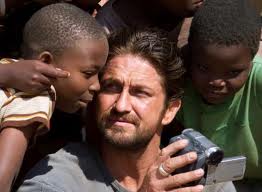
I'm not one who usually recommends movies, let alone one that has an R rating and especially not one with a cheesy title like "Machine Gun Preacher." This movie, however, was an extremely eye opening piece of work based on the true story of Sam Childers and his passion for orphaned children in Uganda.

Recently a friend of mine has been working on a paper in defense of pacifism. The issue of just war has been on my mind a lot as I analyze his thoughts. The movie, Machine Gun Preacher depicted well the darkness that can infest a man's heart as he takes life even in an attempt to preserve life.

I am not a pacifist in practice, but I am a pacifist in theory. In other words I believe that the taking of life should always be a last resort and can only be justified as a means for the preservation of life and a greater good. But it comes at a cost. The cost is what must be weighed ultimately. In a perfect world there should be no violence. The human heart as created in Imago Dei should abhor violence and any manifestation thereof. Violence and war are a result of a fallen world. We hold great hope in God's plan for complete restoration to the beauty of His creation. We hope for a time when there will be no war and violence. At heart one's eschatological views should make all men pacifists.

There is great power that accompanies a person's calling to defend the defenseless, the innocent, the orphan or widow. When this defense calls for violence, a debatable demand, we risk becoming drunk with this power. We risk crossing a line where the hatred of those harming the ones we love overwhelms us to the point where we can no longer see them as Imago Dei and the taking of their lives no longer pricks our conscience. It is at this point where we have lost sight of the greater good.

As a former military member I have seen the repercussions of PTSD on many of my loved ones that comes as a result of seeing death and suffering and to an ever greater extent, in response to the taking of life. PTSD is a very real disorder that comes in direct proportion to the sensitivity of human conscience. There is an element of comfort that should accompany the presence of PTSD in that the conscience is not dead and is in fact reflecting a very real violation of life. Violence ought to disturb us and disturb us greatly.

There is much debate over the concept of a violent God in Scripture. A violent God there is nonetheless. But why? He exists because there is a desire for the preservation of life and more fully in the manifestation of His redemption through Christ for the extension of a fuller eternal life. One might credibly argue that the greatest act of violence in the history of mankind was at the foot of the cross, and yet without that violence there would be no eternal life. Evil is still present in our world thereby making violence and war sometimes a necessary means for the preservation and defense of life. But when we lose sight of God's ultimate accomplishment in Christ's work on the cross, we abandon the hope of a future where there will be no more suffering, no more violence, no more war. Pacifism should be at the heart and hope of every human.

Friday, May 18, 2012

Hospitality

My initial response to the word "hospitality" is, Dear God, please no. I have a lot of gifts, some more prominent than others. I would say that my most motivating gift is teaching; I absolutely love it. The research, the compiling of information, the organizing, and the writing - love it! In fact my love for it is so compelling that it causes me to fear any identity in other gifts. I want to converse with people, to engage with their intellect, to coax out ideas, to match minds. I don't want to be stuck in the kitchen! I think one of my greatest fears in ministry has been that I will walk into a place, they will see I am a woman and immediately stick me in the kitchen or in the nursery and my longing for cerebral intimacy will dissipate into loneliness and the monotony of screaming infants and clanging pots. Oh God, please no!

And so, I hide. I hide the gift. But it's not really possible to hide. Really. I find myself leaping inwardly at the opportunity to host events or feed people. And even then I feel shame for wanting that. I recall one evening a friend asked me why I made food for a gathering and I was afraid to say, "Because I love doing it." I found myself conjuring a list of excuses to spout off, detracting and derailing any attempt to trap me in that box. It's silly, I know.

I have discovered that my affinity for hospitality is not so distinct from my teaching gift; both involve feeding people. I am simply driven to give people what they need for sustenance and  growth. Teaching spiritually feeds the body of Christ, giving us nurture and goodness. The healthier we are as a body, the more united we are. We eat from the same plate and we drink from the same cup and we are one.

Food has a way of drawing people together into community and cohesion. One evening I made food for an event. I recall walking into the room carrying my plate of treats and what was a scattered room suddenly became a cluster of chatter and excitement circulating around food. The excitement wasn't over the food, but food was the venue for drawing together and uplifting those present. It is the same with our spiritual food and our expressions of that. Whether through the Eucharist or through the preaching of the Word, it is all food that draws us together and unites us in the body of Christ. And so I am convicted to more boldly use this gift to foster greater unity around me.

Several years ago a friend of mine identified compassion as his driving motivation in the expression of gifts. And he was saddened. Not because of anything internal but because of others' perceptions of his gift. He was told that his gift of compassion greatly incapacitated him in any kind of pastoral or leadership role. Translation: "You poor sap, what a girly gift to have." It was most unfortunate and greatly misguided. I would choose that man to sit through any pain, sorrow, or distress with me in life. Fortunately he disregarded that misconception and now serves as a hospital chaplain, walking friends and families through the pains and losses in life.

Stereotypes, whether of gender, culture, or race in the body can hamper us from the expression of our gifts and it is a key tool of the enemy to prevent us from serving and strengthening one another. Are there gifts you hide because you are afraid of how others will view your contribution? Are there cultural conventions that drive you into hiding the gifts God has blessed you with for the lifting up and edification of His body? Don't squander them. God gives them because they are needed. Use them boldly.


Thursday, May 17, 2012

Dr. Who's Modern House of Bones Touch Alcatraz

I was upset when they killed off Neil Perry in Dead Poets Society and I am even more dismayed that producers feel the need to kill off Wilson in FOX's House. If I were Robert Leonard I'd wonder if people didn't enjoy killing off my characters. Talk about typecast. You can't kill off Wilson people! He's the only character that grounds the show. House is getting sent back to prison. Who cares?! The guy's an insane abuser, who makes a mockery of his oath to "preserve the purity of my life and my arts" and it's pathetic how endeared we are to him, myself included. Is that Hippocratic or hypocratic? I'm just a tad bit upset about this.


Evidently Bones is going to prison too. It must be the "in" thing right now to send your lead character to prison. Anyone else on FOX getting sent to prison this season? I'm proud of her for becoming a fugitive though. It's completely irrational and shows character growth. Hurray for character growth! I strive day in and day out to gain an inch of ground in character growth and here she pulls it off in one episode. I guess I just need to go to prison.
 

Kiefer's gone metro, which is kind of hot. I like a man who can dress. His acting is the annoying part in the new show, Touch. You would think after 9 years of raising an autistic child you would stop yelling his name every time the kid wanders off. He's not going to respond! Why are you yelling?! Nevertheless, yell he does - over and over and over again. Half the show is good ol' Kief running, out of breath, yelling after his son, who never responds. It's like 24 only not. I am mentally exhausted at the end of every episode. So, why do I watch it? Cryptology. Yeah, I know. Nerdy. But I love it. I overlook the poor directing in favor of puzzles and numbers. Who knows, maybe the plot will grow on me like Lost did. By the end of the show I was enamored with all the characters, poor acting and all. AND I got my number fix: 4, 8, 15, 16, 23, 42! So here's to hoping.


Speaking of Lost, Jorge Garcia has moved on to the new show, Alcatraz. It's pretty good. A bunch of prisoners from Alcatraz disappear in the 60's and time jump to the present. They were all reported dead at the time so there's no record of any of them in the system and they're running amok wreaking havoc in San Fransisco. Jorge is a subject matter expert on all things Alcatraz and gets drafted as part of the team to track down all the criminals. It's kind of like a Fringe meets CSI show. There's a little romance woven in. One of the "jumpers" was a doctor from the 60's dating a guard who did not make the jump. He waited all these years trying to find her and now they have been reunited. Only the decades of separation have resulted in a torturous tension as he is older and she has not aged a day. It kind of wrenches your heart, like Dr. Who and River Song. So far I like it and am looking forward to seeing how the plot will unfold.


 I started watching Modern Family. Don't judge me. A friend got me hooked. It's hilarious. And it makes me feel like my family is completely normal. So however delusional that may be, it is a comfort. I learn useful tidbits for child rearing as well. Take that Focus on the Family! In a recent episode, Mitchell and Cameron find out that Lily is a "runner." Oh how this resonates with me. Declan is a "runner." And there's no beating it out of them. On a family trip to Disneyland, they decide to put Lily on a kid leash (yes, I've done the same with Declan.) Apparently there is something socially unacceptable about tethering your child. I never knew... but I guess there is. Anyway, Grandpa Jay gets an idea and buys Lily a pair of princess heels to walk around in. He got the idea from his glamorous hobbling wife who was attempting to maneuver the amusement park in her 5 inch heels. So now Lily is perfectly content prancing around in her little heels and completely oblivious to the fact that she can't run. It's a great lesson. I plan on buying Declan his first pair of heels this week. I'll let you know how that works out for us. 


Hello Sweetie. Dr. Who? Uhm, yes. I must confess. Matt Smith was my first. I will never love another like I love him. I have spent time with Eccleston, and even came close to falling for Tenant, but no one can captivate me quite like Smith. The latest season ended with "The Wedding of River Song." Spoilers! No, not really. I'll leave the end a mystery for those who haven't seen it. If you have not dabbled in the Who, you need to. That is all there is to it. 


Well, that's pretty much all I have time to watch these days between school and full time mom. I've been flirting with the idea of watching Battlestar Galactica but the jury's still out. I dip my toe in the water with random episodes, but am still abstaining from a full on leap into the water. I'll catch up on other stuff when I get my Netflix back after graduation... in a year.


Wednesday, May 16, 2012

The Oddity of Discernment

This last semester I spent a great deal of time in the Hebrew text of Genesis 1-3. Such a beautiful and masterful story ending in such devastation and tragedy. Sometimes the extremes are more than one can bear. Quite literally in fact, we could not bear it and it is only through Christ and His work that we have any semblance of meaning. I spent a lot of time wondering what was meant by the phrase, "and they knew that they were naked." So they didn't have clothes, big deal.

The Fall was something far greater than just a physical reality. We understand today that spiritual repercussions accompanied the physical pronouncements. "You will surely die" meant physically and spiritually. But what about the nakedness?

The work of the Cross negated the consequences of sin pertaining to spiritual death and it is our hope that one day we will overcome the consequence of physical death through the power of the resurrection. The physical reality is yet to be fully realized but the spiritual reality is here now. We have eternal life now because of the cross. But again, what of the nakedness?

The gift of discernment is an oddity in the nine-fold list of Holy Spirit empowered gifts. Words of wisdom, words of knowledge, faithfulness, healing, miracles, prophecy, discernment, speaking, and interpretation of tongues. My sister, as well as several friends of mine, exercise discernment frequently, but it is different from the others in that it is not such an overt manifestation as are the other gifts. It is subtle and quite unnerving. How is it unnerving? We go through life learning to survive and mask our vulnerabilities from others who may take advantage of our exposure and suddenly someone comes along who quite effortlessly strips away the facade and sees us for what we truly are. We are suddenly naked.

I have talked to many men and women who function similarly when life overwhelms us. We strive even harder to cover up our despair in life by focusing on disarming others through our appearance. I have found I receive some of the greatest compliments when I am feeling my worst. Then along comes a friend with discernment and I find myself thinking, "Oh great! Why did I even bother wearing make-up today, let alone dressing myself?" What is the purpose of this obtrusive stripping?

Nakedness without shame. That is the purpose. It is the spiritual redemption of the cross continued in the work of the Holy Spirit allowing us to be exposed and naked without shame, or at least bringing the shame to the forefront so that we may be convicted to alter the source of shame. Discernment propagates authenticity. Authenticity is necessary for relationships both with God and with others. We cannot truly enter into community, intimacy, and relationships without nakedness. That is true both in its physical reality and spiritually in the body of Christ. It is awkward to feel the probing opened eyes of discernment. It is invasive and uncomfortable. But it is necessary in restoring us to Eden.

I never before associated the gift of discernment with a restoration to Eden until a recent conversation with a friend of mine and it was all a matter of timing. Since I had been so intently immersed in Genesis for weeks our conversation on the vulnerability created by discernment immediately thrust me into the creation and fall imagery. And I knew I wanted that. I wanted to return to Eden. I wanted to be naked and vulnerable without shame. I wanted to be authentic in community, intimacy, and relationship. I suddenly wanted to be discerned, for the layers to be peeled away and to be exposed because it is only through that exposure that we can truly enter into the fullness of relationship.


Tuesday, May 15, 2012

The Good, the Bad, and the Ugly

Winter has faded. Spring is but a shade. Summer is rushing headlong towards us. Summer is by far my favorite season. I love them all, but not equally. I love the sweltering heat, breezy mornings, relaxing evenings on the patio, and most of all, play. I love to play. And summer is the time to play.

Play gets a little tricky this summer. I'm taking 3 classes at seminary: Evangelism and Discipleship, Growing in Ministry Leadership, and Globalization in Theological Education Chinese Worldview Today. Fortunately they are not all at the same time and staggered throughout May, June, and July. I'm really looking forward to the course in Globalization as it involves a trip to study in China for 2 weeks.

I took a long break from blogging this semester; more out of necessity than desire. Blogging is therapy for my mind. It gets a little crowded in there if I do not have a venue for spewing excess thoughts. This last semester I had so much paper writing, I was not at a loss for information dumps. My exegetical paper in James was the most time intensive assignment. Trying to keep up in Hebrew at the same time was rather challenging. I do not recommend taking two languages simultaneously and if I had to repeat it, I would definitely opt for the summer Hebrew class as many of my peers have done. Unfortunately I missed that memo and hardheadedly stuck to the degree program worksheet. Drat my inflexibility! I am learning. I am very thankful for my two tutors, Deirdre Brouer and Matt Hollomon, who got me through the year in one piece. I need to throw a shout out to Denise Morris as well for being an encouragement in Hebrew. For some reason just hearing her say, "You'll be fine" was reassuring enough to calm my panic-driven test anxiety.

I loved my theology and homiletics course this semester. We had some pretty fun banter going in the theology class. The more diverse the backgrounds in the class the funner, yes I said it, the funner the discourse. Homiletics - OMG! Who knew? I love preaching! Learn something new every day. I'm just glad to find that out. I had overruled my pastoral gifts because of a slight fear of preaching. Most of that had to do with just not knowing proper structure and format. Having those tools made all the difference.

I totally dropped the ball on Training and Mentoring this semester. It happens. Well, not to most people, but to me, it did. The geographical relocation combined with James semester stress and just life in general meant something had to give. Shifting my entire network to a new city and trying to maintain mentoring relationships in the former is not really an optimal equation for success. One of my summer projects will be to finish transition and move my mentoring network to Littleton. So beware! I'm on the prowl for loved and respected leaders in ministry to aid in the remainder of my seminary journey.

Declan has decided he likes coffee now and manages to find and sneak my brew.. I am glad I have mornings free for the summer. They are becoming quite the craze around here. I foresee a few trips to Monkey Business to let him burn off steam... and caffeine. I finally have time to peruse the neighborhood. There is a bowling alley around the corner and a skate city close by. Rainy day dilemmas solved! Declan loves hiking! Naturally. He doesn't really hike; he just rides along in the pack. I can't complain. It's great exercise. Naomi's getting better at distance; it just depends on the day. Some days she can hang for 5 or 6 miles, and other days she poops out at 2.

I have some camping trips in the works for the kids this summer. I'm really looking forward to it. We didn't get to camp at all when I was growing up. Probably had something to do with living in a steel jungle with the third largest population in the world; not too many opportunities to wander off in nature. I took Naomi when she was younger, but it's been a few years. Declan is coming up on 3 and the perfect age to start enjoying it and Naomi is still young enough not to get annoyed at family trips. That won't last much longer. 14ers. Yep. Going to do a few of them.

I started dancing again. I forgot how much I loved it. It's been a long time. I used to dance a lot. Part of my summer fun will be dancing. Other than writing I don't choose too many creative outlets; dancing will be one. I plan to paint a little too. I'm a horrible painter, but I like to do it anyway. It gives Naomi a chance to poke fun at me. She's my little artist. Every now and then I go to one of those 'Sipping and Painting' places and pretend to paint. I'll be doing that a few times this summer. I'm picking up piano again. At least that's the plan. It's been a long time but I always feel a tremendous amount of regret and sadness over letting the skill go when I hear others play. So that's enough of that. I'm just going to start playing again.I played scales this morning, boring but necessary. I'll get there.  There will be lots of volleyball. I thought it would be a little harder to get back into it than it has been. It's been a few years since I've been able to play competitively. Something about being pregnant and having children sort of gets in the way of that. Although I did play volleyball while I was pregnant with Declan. That was fun... and awkward. But it explains why he's such a little adrenaline junky. I may have taken him on a few rollercoasters in utero as well. Rollercoasters! Yes. I need to do that this summer as well. And lots of water play. The kids love water.

What to watch ? I'm all caught up on Dr. Who for the new season starting in September. I'm rather limited in what I can watch since I swore off Netflix until I graduate from seminary, so whatever can be DVR'd pretty much. It just wouldn't be summer without a few Clint Eastwood flicks. Arid deserts, dirty unbathed men, sultry women and guns. I know, gross... but to each their own. I'd rather read than watch anyway, so I will probably focus most of my free time on reading what I want to read. A friend sent me a list of Kierkegaard to tackle and I have a few books on the Trinity piling up that I need to wade through.I will probably sneak in a Clive Cussler novel or two, you know, just to be gluttonous.

And that's my summer! More to come soon...


Sunday, May 13, 2012

The Mother Church

A woman lies curled in her bed, seeking comfort and solace in light of another onset of menstruation. Seven years of fertility drugs and 3 miscarriages have left her empty and devoid of life. 2 years later this young woman again lay in bed, only this time delivering a little girl 15 weeks early. Motherhood for her is riddled with pain in conception, striving in delivery, and years of laborious efforts to keep her young daughter on par with growth scales.

A 21 yr old woman discovers she is pregnant. In a brief assessment of her life, direction and future, she realizes she is incapable of providing a stable home for her son. The only recourse she can see is to find a loving and promising home for him. Three days after he is born she feeds and changes him, buckles him into his car seat, prays over him, and kisses him goodbye as he is whisked away into the receiving arms of his new mother and father leaving the young woman’s arms empty and her body yearning to sustain an absent infant. Motherhood for her signifies emptiness, heartache, and questioning.

A young man stares out the driver’s seat window at the front doors of an abortion clinic. His girlfriend, inside for the last hour, walks intentionally to the car and slides into the passenger seat. They sit and talk over the implications of an ultrasound image portraying twin life within her.  Fearful of what the world would think of them they follow through with their initial plan to terminate the pregnancy. 10 years later this man still grieves every anniversary of that day, crying over the loss of life that was part of him. To this seasoned, war-hardened marine, motherhood symbolizes loss, untrustworthiness, and death.

An abandoned and divorced mother struggles to put back together some semblance of normality for her family. She scrambles to recover a career laid aside for family planning, and provide for her children.  For this woman motherhood means loneliness, undesirability, and unrealized dreams.

A middle-aged woman battles with the changes of her body as she nears the end of her reproductive cycles. While having a sense of fulfillment over the children she has, she watches them struggle in asserting their independence in the world and wonders if she should not and could not have done more. As she gazes upon her legacy in the world she is plagued by regret. Her body grieves the end of a season.  Motherhood to her encapsulates purpose gone, mistakes made, and relationships underdeveloped.

One of many traits these seemingly unconnected individuals possess is that they have all come to the Church seeking wholeness and healing. The problem we encounter with identifying the Church as Mother is that it often adopts the form of our preconceived notions of motherhood as opposed to defining a concept that we are to then imitate. We define the Church by what we know instead of allowing the Church to define what we know. St. Augustine is credited with saying, “The Church is a whore, but she is my Mother.” Is she a whore because it is ingrained in her nature? Or is she instead a whore because we bring our fallen and broken images of mother and impose them upon her?

The Church is to stay true to the purpose of her existence in morality, maintenance, and mission. The Virtuous Bride of Christ brings healing and restoration to a broken world. The Church, as the body and bride of Christ is to reflect His name, desirability and character to the world. Throughout history and into the present the church frequently ignores matters of social concern and her role to meet those concerns. She sacrifices morality, and mission for the sake of her own exaltation and maintenance.

Proverbs 31 is written as a literal explanation of what is desired in a good wife. As women work through the implications of this passage, the impossibility of this character and her characteristics becomes apparent and overwhelming. In the context of the book of Proverbs these many characteristics are repeated throughout the book as qualities belonging to the personification of wisdom. True wisdom belongs to God. 
 
In the NT men are exhorted in their roles as husbands to be Christ-like. We understand the exemplification of these characteristics to be good because Christ, as God, possessed the divine nature of God. Husbands strive to be more like God in character through their roles as husbands. Rarely do we look at the qualities praised in women as also being characteristic of the divine nature; and yet they are. The characteristics depicted in the personification of wisdom and culminating in Prov. 31 are exemplary of the role of wife and mother. In the NT, wives are exhorted in their roles as wives in comparison to the Church as Christ’s bride. Since Scripture is not intended to be contradictory then the roles described in Prov. 31 not only apply to the physical femininity of women in the role of wife but also apply to the spiritual femininity of the Church in her role as the bride of Christ.

Proverbs 31:10-31 An excellent wife, who can find? For her worth is far above jewels. The heart of her husband trusts in her, and he will have no lack of gain. She does him good and not evil all the days of her life. She looks for wool and flax and works with her hands in delight. She is like merchant ships; she brings her food from afar. She rises also while it is still night and gives food to her household and portions to her maidens. She rises also while it is still night and gives food to her household and portions to her maidens. She girds herself with strength and makes her arms strong. She senses that her gain is good; her lamp does not go out at night. She stretches out her hands to the distaff, and her hands grasp the spindle. She extends her hand to the poor, And she stretches out her hands to the needy. She is not afraid of the snow for her household, for all her household are clothed with scarlet. She makes coverings for herself; her clothing is fine linen and purple. Her husband is known in the gates, when he sits among the elders of the land. She makes linen garments and sells them, and supplies belts to the tradesmen. Strength and dignity are her clothing, and she smiles at the future. She opens her mouth in wisdom, and the teaching of kindness is on her tongue. She looks well to the ways of her household, and does not eat the bread of idleness. Her children rise up and bless her; her husband also, and he praises her, saying: "Many daughters have done nobly, But you excel them all." Charm is deceitful and beauty is vain, but a woman who fears the LORD, she shall be praised. Give her the product of her hands, and let her works praise her in the gates.
 
The original audience for this passage was the nation of Israel. When we extrapolate meaning and application from a passage for the purpose of applying it to a modern audience, we must be true to the process. While these attributes were indeed desirable for a spouse at that time, we must question why these traits are admirable. Each and every trait is desirable because they are attributes of God’s character. In all the history of mankind have you ever seen or known God to exalt or honor characteristics that are not first and foremost His own? The answer is – no! So we must conclude that these are characteristics of God. Each attribute described in Proverbs 31 aligns with a parallel use in reference to the personification of Wisdom throughout wisdom literature in the OT. If these attributes are desirable in a bride because they reflect the divine nature of God, then it stands to reason that as the Bride of Christ these are attributes Christ desires in us and characteristics that please Him. 

So the question remains who are we attempting to please? Do we desire to please the world or is our desire to serve our Groom. Are we, the Church, prudent with our finances, spending wisely on land, buildings, and modifications? (Prov. 31:13-16) Are we reaching out to embrace, feed, and clothe the poor and needy? (Prov. 31:20) Are we vigilant? (Prov. 31:18) Do we focus on pleasing the masses, and appealing to their senses or are we faithful to a genuine respect and fear of the LORD? (Prov. 31:30) Do we make our Groom's name known and respected to the world? (Prov. 31:23) 

 “Her husband has full confidence in her and lacks nothing of value.  She brings him good, not harm all the days of her life.” Ideally this is a very difficult role to embrace. God trusts us? Why would He do such a thing? Is it even theologically sound to suggest that God would place His trust in something outside of Himself? This may be where we are permeated with skepticism and doubt. Are we outside of God, or are we truly grafted into His body and part of Him extending to the world? Now THAT is an overwhelming concept to ponder.  God has pulled us into Himself, into His family, and trusts us fully with His mission to the world. That can certainly hold water. But what of our handling of this task? Have we, as Prov 31: 12 suggests, brought Him good, not harm, all the days of our life? Conceptually, yes; specifically, no. Because we exist today, we are an attestation to the life-giving power and endurance of God in the world; 2000 years is nothing to sneeze at. We have failed in some aspects because we are an organism compiled of imperfect and broken people. In a Kingdom economy a good wife and mother is the Church.  I am not suggesting some hidden secrecy or foretelling prophecy, it is an eternal principle of the intimate relationship between bride and groom and thereby a subsequent tool for defining the role of the Church in her relationship to Christ.We, the Church, are Christ's Bride and True Mother to the lost and hurt in the world and grace emanates from our very existence.

The scenarios I shared at the beginning of this piece were not mere hyperbole. They were not construed to evoke emotion or manipulate your feelings.  These are real scenarios that I have observed and participated in. This was my family and our experiences in and with motherhood. The woman struggling torridly through the barren wasteland of infertility, the young woman who found herself wrestling through the implications of unplanned pregnancy, the young man fearful of cultural and societal impressions and expectations, the woman picking up the pieces of a broken marriage, and the aging woman’s realization of a season ending - these are our stories. These stories are common within the Church and often overlooked and the Church does not fulfill her role as mother to this very real pain and sorrow in her midst. This Mother's Day I challenge you to question what "mother" means to you and ask the question, "Are we emulating brokenness in our expression of this role in the Church or are we adapting the divine image of Mother lain out for us in Scripture?" This Mother's Day, whether you are a physical mother or not, remember that we are all a part of the body of Christ and therefore Bride and Mother with implications much greater and longer lasting than any role we will have in this life. We are Mother.